
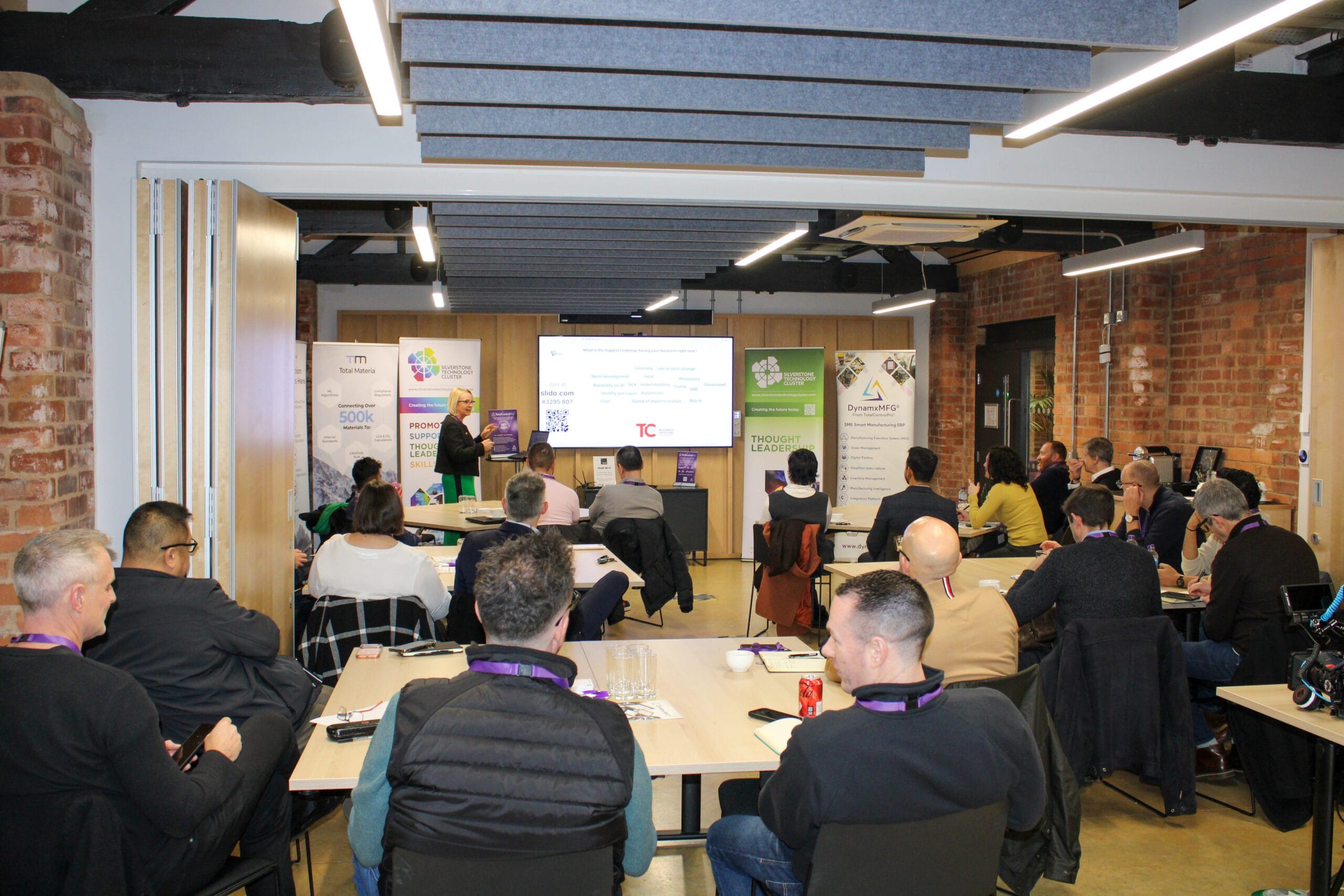
At the Silverstone Technology Cluster’s recent Digital & Advanced Manufacturing (DAM) event, one message cut through the AI hype: successful AI adoption starts with process, data, and people, not tools.
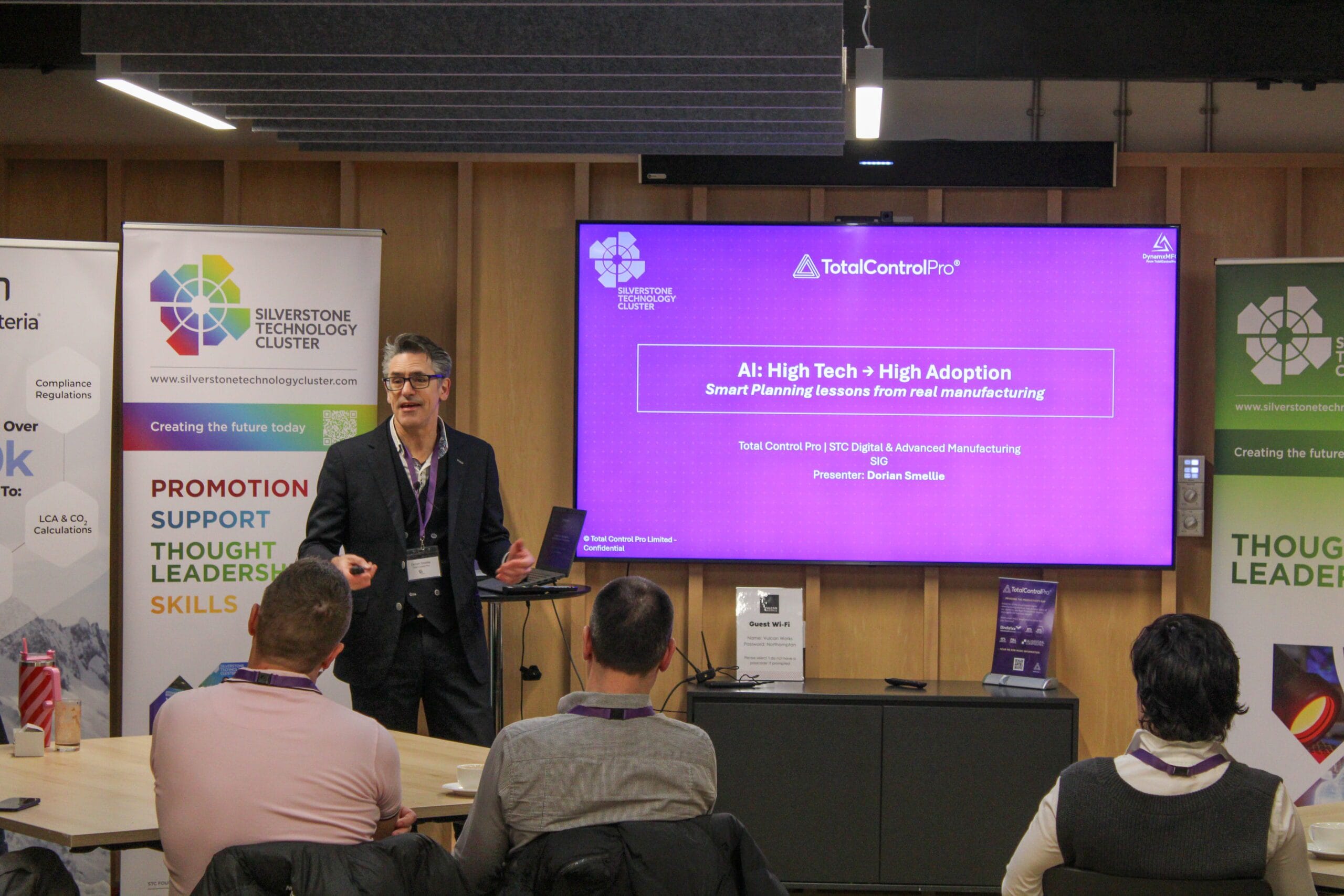
Representing TotalControlPro, co-CEO’s Dolores Sanders and Dorian Smellie, and Fractional Marketing Officer Damian joined the discussion to explore what AI actually looks like when applied inside real manufacturing and service businesses, particularly those dealing with legacy systems, fragmented data, and workforce scepticism.
AI Starts with Strong Foundations
A recurring theme throughout the session was that AI should be treated as the final optimisation layer, not the starting point. As Damian described it, AI is the “cherry on the cake”, the last 10% that only delivers value once the other 90% is already in place.
Businesses that rush to deploy chatbots, agents, or predictive models without fixing broken workflows often see little return. In one service-sector example discussed at the event, a £2m-turnover company struggled with poor SOPs and unclear responsibilities. Only after mapping real workflows and tightening processes did AI tools genuinely free up staff time and improve satisfaction.
The lesson was clear: AI amplifies what already exists, good or bad.
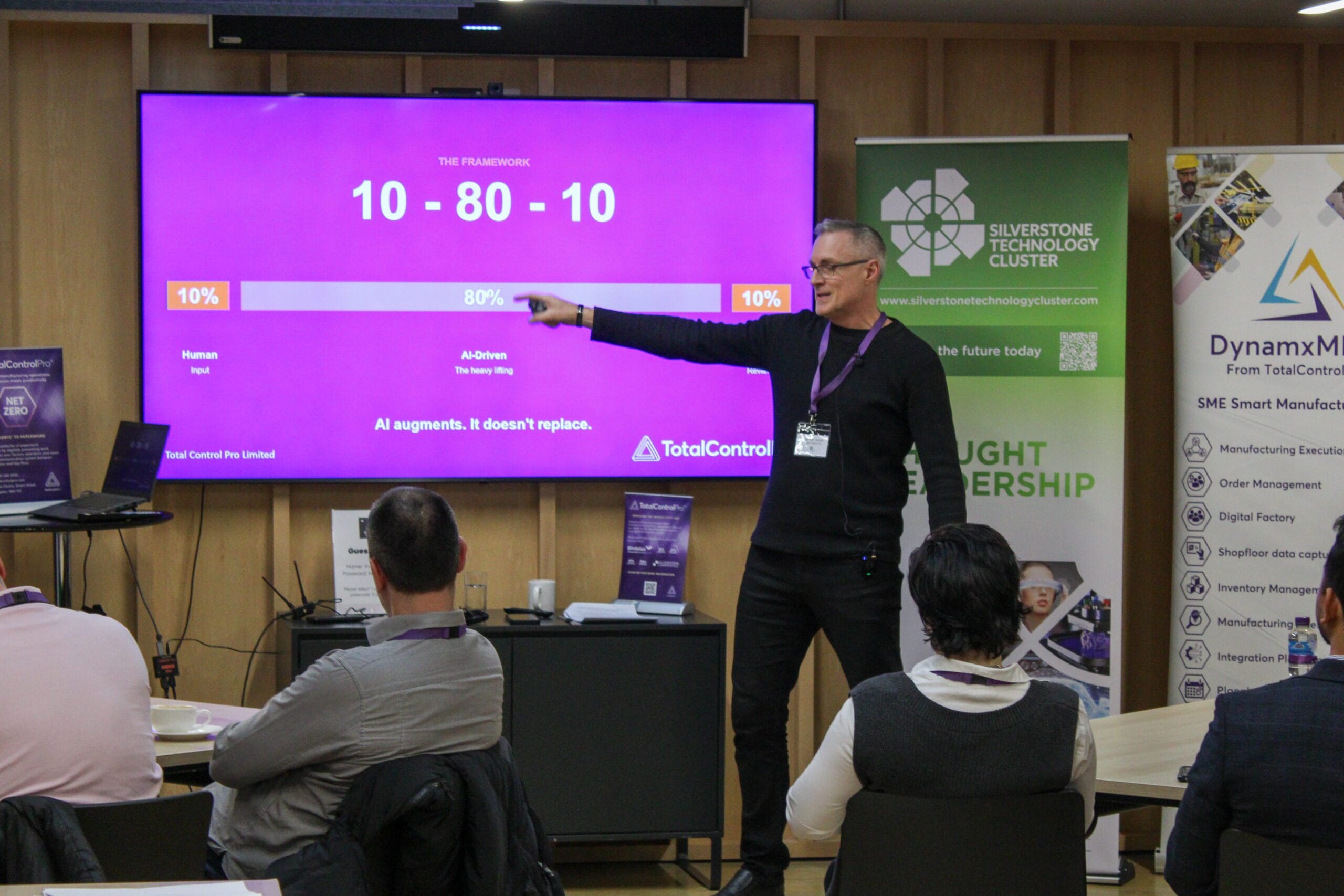
The 10 / 80 / 10 Rule for AI Adoption
To make AI practical rather than theoretical, Damian outlined a simple framework:
- 10% business input – define the business case, context, tone, and guardrails
- 80% AI execution – drafting, analysis, automation, and data processing
- 10% human review – expert validation and judgement, delivering the “human premium”
This model reinforces that AI is not about replacing expertise, but scaling it responsibly. Human oversight remains critical, particularly in manufacturing, legal, and safety-critical environments where errors carry real risk.
Data Before Intelligence
AI adoption is as much a cultural challenge as a technical one. Dorian shared how early AI projects in aerospace manufacturing succeeded only when humans stayed firmly in control. Rather than black-box automation, assistive “co-pilot” tools helped planners make better decisions without removing autonomy.
Clients were treated as co-designers, not end users, building trust, improving adoption, and ensuring tools solved real problems. This approach also helped address common fears around job security and accountability.
An internal AI champion was highlighted as essential: someone responsible for education, governance, and keeping AI aligned with business reality.
From Manufacturing to the Wider Business
Beyond the shop floor, the event explored how AI is already transforming areas like marketing, compliance, and legal review. Examples included layered content creation models that cut production time from days to hours, and AI-assisted document reviews that dramatically reduce turnaround, while still requiring human sign-off. Across all use cases, the message was consistent: build small, prove value, then scale.
Looking Ahead
With AI adoption rising sharply — from 55% to 78% in a single year — the consensus was that 2026 and 2027 will be pivotal. Agile SMEs, unburdened by heavy governance and legacy thinking, are well positioned to move faster than larger competitors.
As the Digital and Advanced Manufacturing event made clear, the winners won’t be those who use the most AI, but those who embed it thoughtfully, securely, and human-first into the way they already work.
Related reading

Keep reading
A 30 minute call, a live look at DynamxMFG, then we configure it on your data and show it back to you.


