
Industry · Electric Vehicles
Cell batch to pack,
traced on every serial number.
DynamxMFG records every cell batch, torque check and serial number as the work happens, giving electric vehicle manufacturers full genealogy on safety critical assemblies and live build status as volumes climb.
Sound familiar?
The ramp, and everything it strains
Building electric vehicles is a moving target. Platforms change while you are building them, volumes climb quickly, and every safety critical assembly has to be provable long after it leaves the line.
Cell batches lose their identity
Modules and packs are built from cells that arrive in batches with their own dates and test data. Once they are assembled, a paper record is the only link back, and paper goes missing.
Engineering change outruns the paperwork
New platforms change week to week. A revised torque figure or a new bracket reaches the floor late, and someone builds to the old revision without knowing it.
Volume climbs faster than the process
A line that works at low volume struggles when output doubles. Without live figures you find the constraint after you have already missed the build plan.
Side by side
Spreadsheets and generic tools vs DynamxMFG
Generic tools were built for office work, not for safety critical assemblies where every cell batch and torque reading has to be provable years later.
| DynamxMFG | Spreadsheets and generic tools | |
|---|---|---|
| Cell and module batches | Batch references captured at the operation that consumes them | Logged on paper, keyed in later or missed |
| Pack serial genealogy | Search forward from a batch or back from a serial | Reconstructed by hand from files and folders |
| Torque and safety checks | Mandatory readings at the operation, high voltage steps included | Signed check sheets filed and rarely looked at again |
| Engineering change control | Bills of materials and routings updated after release | Reprinted packs and a revision someone missed |
| Ramping to volume | Add work centres, shifts and operations as output climbs | Rebuilt sheets that break under higher volume |
What you get
Everything an EV build needs. Nothing it does not.
Four parts of DynamxMFG do most of the work on an electric vehicle line, from job release through build and check to the plan behind it.
Works Orders and Routing
Every pack, module or sub assembly runs as a works order with its own bill of materials and routing. Operators clock on and off each operation from the shop floor screen, so build time and sequence are recorded against the serial number as the job moves.
Replaces: Paper travellers, printed build packs, spreadsheet job lists
Shop Floor Data Capture
Operators work through the job on screen and enter readings as they go. Torque values, high voltage checks and test results are captured at the operation, and fields can be made mandatory so the step cannot close until the number is in.
Replaces: Check sheets, clipboards, torque logs typed up later
Inventory, Kitting and Batch Records
Cells, modules, wiring and fasteners are issued to the job as kits, with batch and lot references captured where they are consumed. Stock figures move as material is used, so the pack build record and the stock position come from the same entries.
Replaces: Stock spreadsheets, manual kit lists, paper batch cards
Planning and Scheduling the Ramp
Jobs are scheduled against real work centres, shifts and material availability, so the build plan reflects what the line can actually do. As volumes climb you can see where the constraint sits and adjust the sequence before a build date slips.
Replaces: Whiteboards, planning spreadsheets, verbal priority calls
Genealogy
From cell batch to vehicle serial number
A battery pack is a stack of records as much as a stack of modules. DynamxMFG links each cell batch, module serial, torque reading and operator to the pack that leaves your line. That link is made while the work happens, not reconstructed afterwards.
When a supplier flags a batch, the only question that matters is which vehicles are affected. With full genealogy that is a search. You can scope containment to the packs that actually used the batch, rather than holding a whole month of build.
- Cell batch to module to pack to vehicle, in one chain
- Mandatory torque and high voltage checks at the operation
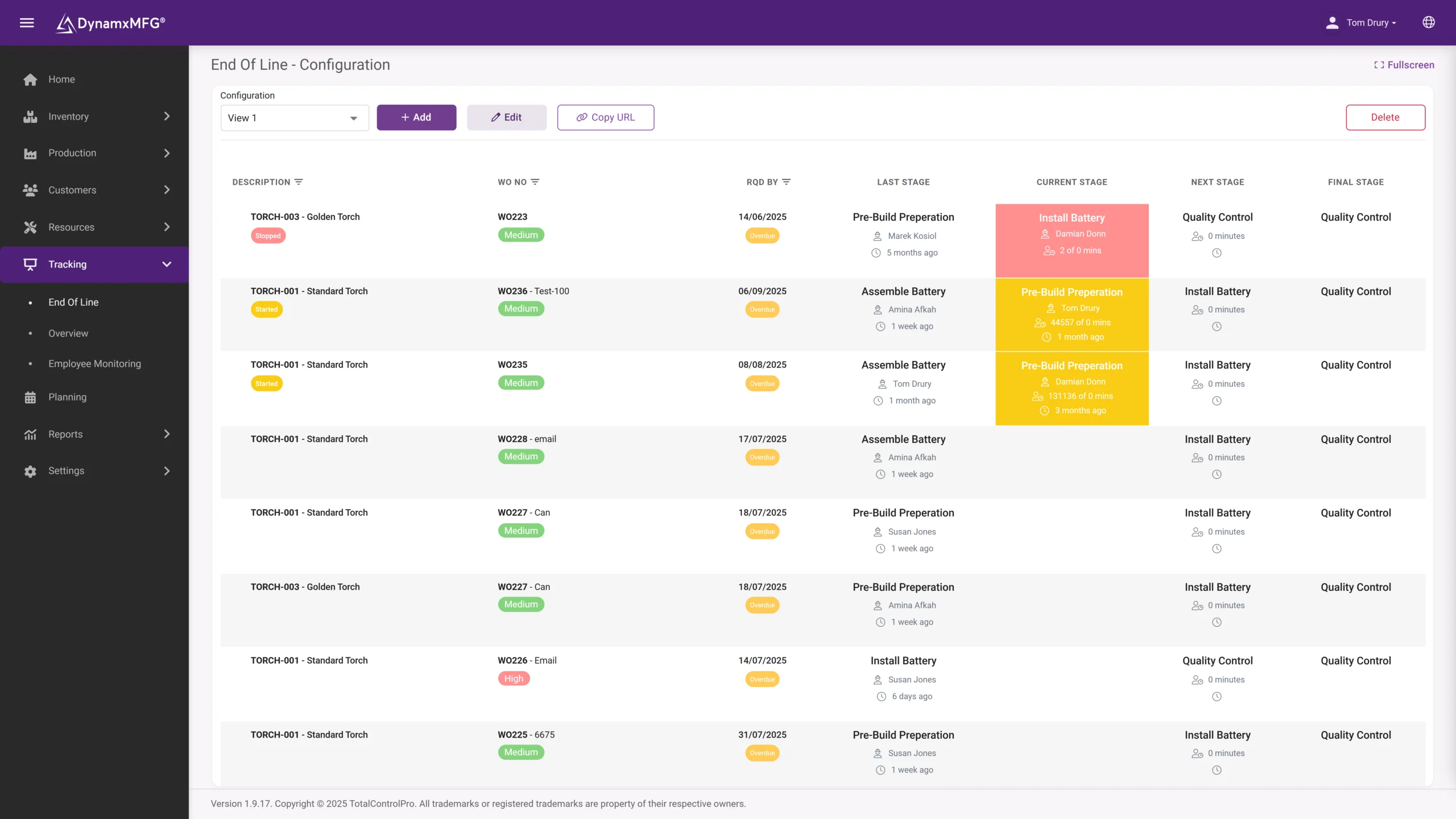
- Live build status through every stage of the ramp
The numbers
What manufacturers get from DynamxMFG
built-in reports, from live production data
from kick-off to running on the floor
more production capacity at GMC
on-time delivery at CPL
Rated 4.1/5 on Capterra, GetApp and Software Advice. Our ratings come from public review platforms, not testimonials we picked ourselves.
Getting started
Live in 90 days, not 18 months
We handle the implementation. Your team stays focused on production. Here is what your first 90 days look like.
Establish visibility and a trusted baseline
The first month replaces spreadsheet chaos and guesswork with a single source of live production data.
Regain control and remove obvious waste
With live data in place, your team shifts from reactive firefighting to data-driven action.
Prove the ROI and prepare to scale
The final phase turns your operational improvements into financial evidence.
Customers
What manufacturers say about DynamxMFG
“DynamxMFG is an excellent choice for manufacturers looking to digitise operations without being overwhelmed by complexity.”
“As GMC has grown, it had become harder for me to have such a keen view on components to see if those parts were profitable or not. DynamxMFG enabled us to monitor the machine time and see whether we are making a profit or a loss on each component.”
“The ability to dynamically modify BOMs after release, adding or removing items from work orders, scrapping and reworking parts, has been the single biggest improvement for our business.”
“We chose the system over competitors because of its ease of use, strong customer support and friendly delivery team. So far, everything has matched what was promised.”
“With DynamxMFG, all our production processes are tracked and the relevant data is captured. This increases our control over the business and helps us identify more opportunities to enhance efficiency and quality.”
“Our experience has been positive, and it was definitely worth switching. The support we have received has been extremely helpful. My favourite feature is the integration and automation capabilities.”
Questions
What electric vehicle manufacturers ask us
Can we trace a cell batch through to a finished pack?
Yes. Batch references are captured at the operation where cells and modules are consumed, and they stay attached to the assembly serial number. You can search forward from a supplier batch to every pack it went into, or back from a pack to the batches inside it, without opening a paper file.
How do you handle torque critical operations?
Torque values are recorded as dynamic data capture fields against the operation. Any field can be made mandatory, so the step cannot be closed until the reading is entered. The value is stored against the serial number, so it is there months later when the build record is questioned.
Our platforms change constantly. Can the system keep up?
Yes. Bills of materials and routings can be modified after release, and the shop floor screens show the current revision on the next job. Operators build to the live version rather than a printed pack. Changes are logged, so you can see what changed, when, and which jobs it applied to.
We are low volume now but ramping. Will it scale with us?
That is the usual starting point. Maeving, the electric motorcycle manufacturer, set up quickly and grew on the system. You configure work centres and routings for the line you have today, then add cells, shifts and operations as output climbs, without moving to a different product.
How long does it take to go live on an existing line?
Ninety days from kick-off to running on the floor. We configure routings, quality fields and work centres around your existing build process, so the system reflects how you already work. Most teams start on one line or cell, prove it there, then roll the same setup across the rest.
Related
Go deeper
Where to read next on serialisation, traceability and quality for electric vehicle component work.
See DynamxMFG running your EV line
Book a 15 minute walkthrough on your own packs, serial numbers and build stages.
Book a Demo

