
Industry · Textiles
From roll to finished piece,
tracked at every stage.
DynamxMFG tracks cut and sew production by roll, lot and bundle, with shade matching, cutting yield and operator output all recorded as the work moves across the floor.
Sound familiar?
Where the floor loses fabric and time
In cut and sew, the cost is rarely in the sewing. It is in the fabric you cut wrong, the shade that does not match, and the bundles nobody can put a hand on.
Roll and lot records live on paper
Roll numbers and dye lots are written on tickets and pinned to the batch. When a customer queries a garment, tracing the fabric back to its roll means going through boxes.
Shade variation surfaces too late
A dye lot that does not match is often spotted at final inspection, or by the customer. By then the fabric is cut, sewn, packed and part of a shipment.
Cutting yield is guesswork
Marker efficiency and offcut waste get estimated rather than measured. You know the fabric ran short, but not which styles or which lays are costing you the most.
Side by side
Spreadsheets and generic tools vs DynamxMFG
Generic tools do not know what a dye lot is, so roll traceability, cutting yield and piecework output all end up back on paper.
| DynamxMFG | Spreadsheets and generic tools | |
|---|---|---|
| Dye lot traceability | Lot and shade held against every roll issued | Ticket pinned to the batch, then boxed |
| Cutting yield and offcuts | Fabric issued and consumed recorded per lay | Estimated from marker efficiency, never measured |
| Bundle progress | Bundles scanned at cut, sew, finish and pack | Walk the floor and count what is there |
| Piecework output | Output per operator, operation and style, live | Tally sheets totalled at the week end |
| Sampling versus bulk | Sample times and fabric use feed bulk costing | Bulk priced from memory and last season |
What you get
Everything a cut and sew floor needs. Nothing it does not.
DynamxMFG is built around the way textile manufacturers actually work, from goods in and lay planning, through sewing and finishing, to despatch.
Cutting Orders and Style Routing
Each style is released as a works order with its own bill of materials and routing, down to size and colourway. Cutting, sewing, finishing and packing are separate operations, so you can see which stage a style sits at and what each stage has cost so far.
Replaces: Paper docket sheets, style folders, spreadsheet order lists
Bundle Scanning on the Line
Operators scan bundles in and out at every operation, so progress and output come from the floor itself. You get live counts at cut, sew, finish and pack, output per operator and per style, and a clear view of which bundles have stalled and where.
Replaces: Tally sheets, line whiteboards, verbal progress updates
Roll, Lot and Shade Control
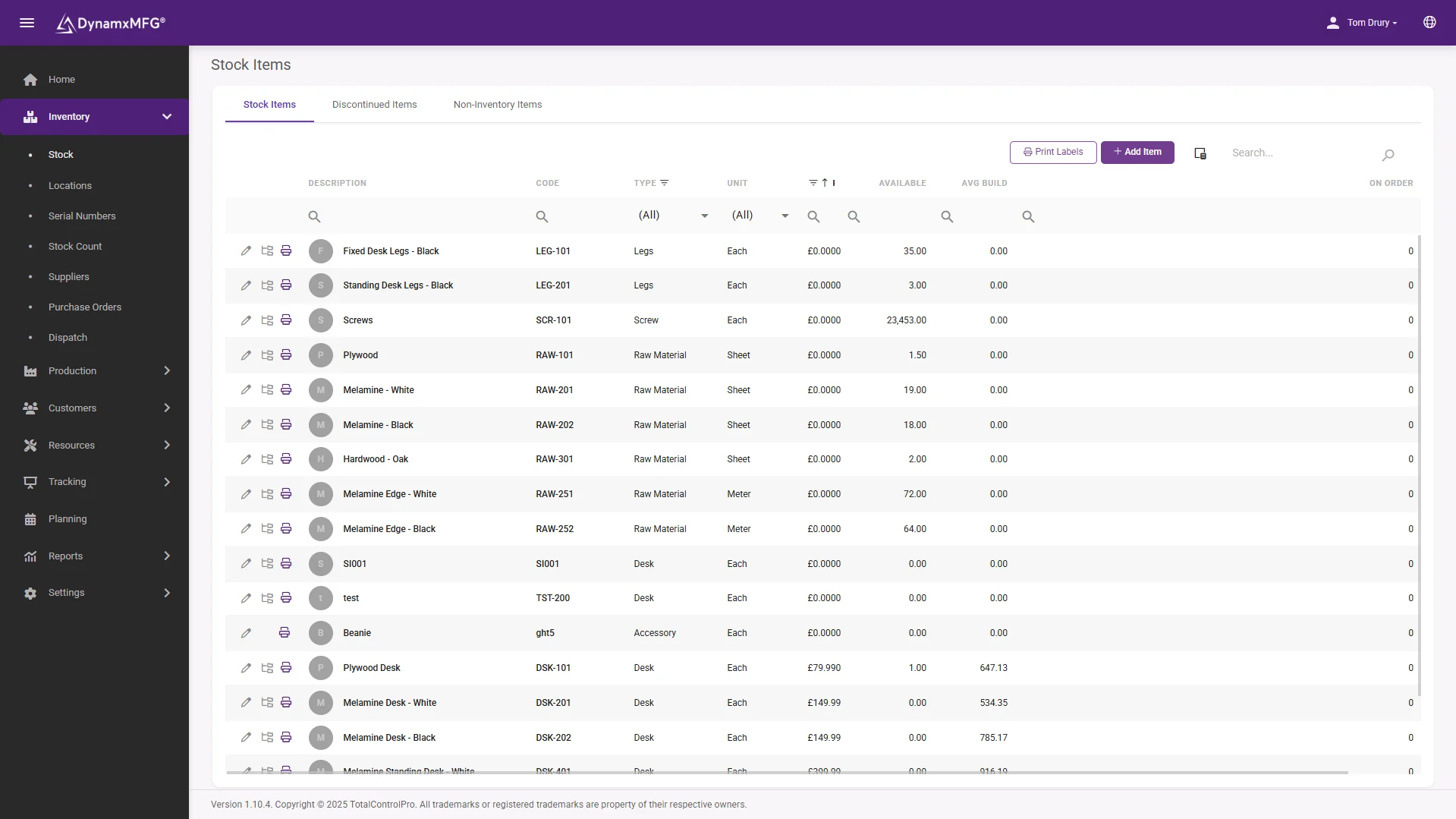
Rolls are booked into stock with lot, shade and supplier references, then issued to a named cutting order. A lay can be stopped before it is cut if the lots do not match. Every finished piece traces back to the roll it came from.
Replaces: Paper roll tickets, stock cards, boxes of dockets
Yield and Output Reporting
Fabric issued, fabric consumed and offcut left over are recorded against each lay, so yield is measured rather than assumed. Over 40 built-in reports break output, yield and labour down by style, fabric, line and shift, so nobody has to rebuild the numbers in a spreadsheet.
Replaces: Month end waste counts, manual output reports, pivot tables
Sampling
Sampling and bulk on the same system
Samples run on the same routings and bills of material as bulk. The times and fabric use recorded while you sample carry straight into the bulk cost, so you stop pricing a style from memory and start pricing it from what it took.
When the style goes to bulk, operator output is captured per bundle and per operation. That gives you a fair, recorded basis for piecework, and a clear view of which lines and which styles are hitting the rate.
- Sample times feed the bulk costing
- Operator output captured per bundle
- Yield and offcut recorded against every lay
The numbers
What manufacturers get from DynamxMFG
built-in reports, from live production data
from kick-off to running on the floor
more production capacity at GMC
on-time delivery at CPL
Rated 4.1/5 on Capterra, GetApp and Software Advice. Our ratings come from public review platforms, not testimonials we picked ourselves.
Getting started
Live in 90 days, not 18 months
We handle the implementation. Your team stays focused on production. Here is what your first 90 days look like.
Establish visibility and a trusted baseline
The first month replaces spreadsheet chaos and guesswork with a single source of live production data.
Regain control and remove obvious waste
With live data in place, your team shifts from reactive firefighting to data-driven action.
Prove the ROI and prepare to scale
The final phase turns your operational improvements into financial evidence.
Customers
What manufacturers say about DynamxMFG
“DynamxMFG is an excellent choice for manufacturers looking to digitise operations without being overwhelmed by complexity.”
“As GMC has grown, it had become harder for me to have such a keen view on components to see if those parts were profitable or not. DynamxMFG enabled us to monitor the machine time and see whether we are making a profit or a loss on each component.”
“The ability to dynamically modify BOMs after release, adding or removing items from work orders, scrapping and reworking parts, has been the single biggest improvement for our business.”
“We chose the system over competitors because of its ease of use, strong customer support and friendly delivery team. So far, everything has matched what was promised.”
“With DynamxMFG, all our production processes are tracked and the relevant data is captured. This increases our control over the business and helps us identify more opportunities to enhance efficiency and quality.”
“Our experience has been positive, and it was definitely worth switching. The support we have received has been extremely helpful. My favourite feature is the integration and automation capabilities.”
Questions
What textile manufacturers ask us
Can we trace a finished garment back to the roll?
Yes. Rolls are booked into stock with lot, shade and supplier references, then issued to a cutting order. Every bundle and every finished piece carries the roll it came from. If a customer raises a fault, you can see which rolls, styles and orders are affected without opening a single box.
How do you handle shade and dye lot matching?
Shade references are held against each roll and checked at the point the fabric is picked. You can stop a lay being cut from mixed lots, and see at a glance which orders were built from which shade. The check happens before cutting rather than at final inspection.
Can it measure cutting yield and offcut waste?
Yes. Fabric issued to a lay and fabric actually consumed are both recorded, so the difference is visible rather than assumed. Reports break yield down by style, fabric and cutting order. You can see which markers and which fabrics lose you the most, then price future work accordingly.
Does it support piecework and operator output?
Operators clock on and off each operation, and bundles are scanned as they move down the line. That gives output per operator, per operation and per style, in real time. You can pay piecework from recorded work instead of tally sheets, and see where a line is falling short of the rate.
Can we run sampling and bulk production side by side?
Yes. Samples run as their own jobs, using the same routings and materials as bulk, so nothing is set up twice. The times and fabric use captured during sampling feed the bulk quote. When the order lands, the style is already configured and ready to schedule.
Related
Go deeper
Where to read next on batch tracking, job tracking and stock control for textile manufacturing.
See DynamxMFG running your cut and sew floor
Book a 15 minute walkthrough on your styles, your fabrics and your production lines.
Book a Demo

